The Cost of Winning: Coming In First Across the Wrong Finish Line (Paperback)
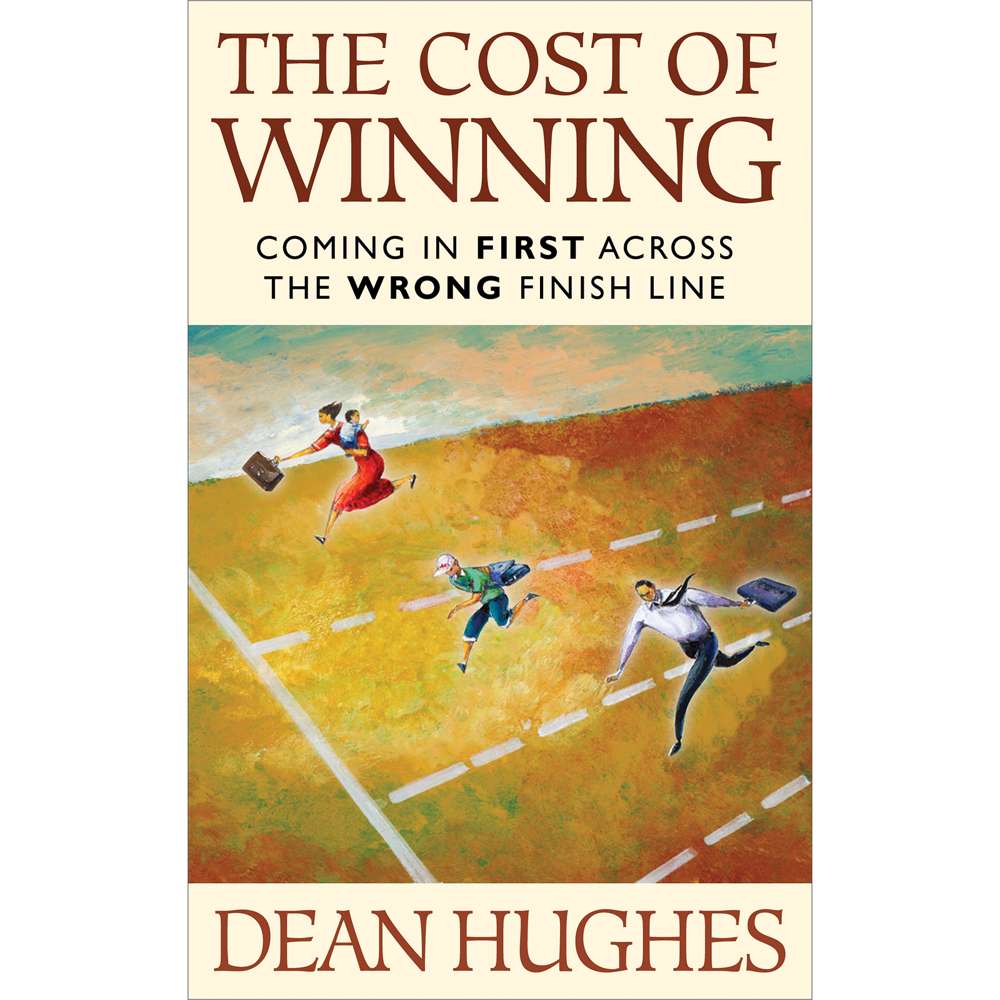
by Dean Hughes
$17.95
List Price
✔ IN STOCK: Ships in 2 to 3 business days
Domestic and International Shipping Options
Other Formats Available
Product Description
Life is a not a contest. Why do we make it one and, in the process, make ourselves unhappy and distant from the Lord? Bestselling author Dean Hughes suggests some ways to "get out of the game," shedding a lot of what doesn't matter and focusing on what does.
"When I stand before the Lord to answer for my life," he writes, "I'm certain that He is going to ask me a very different set of questions from the ones the world asks me. It seems important, during life, to 'win' at all sorts of contests: better job, bigger house, more important Church calling, children with greater achievements. But I think the Lord will want to know whether I was kind and humble and whether I looked out for people in need."
Dean offers some practical suggestions that will help us think more clearly about our priorities and act in ways that will make us truly happy — because they will draw us closer to Christ.
About the Author
Dean Hughes has published books for readers of all ages, including the bestselling historical fiction series Children of the Promise. Through Cloud and Sunshine is his one-hundredth published book. Dean holds a bachelor’s degree from Weber State University and master’s and PhD degrees from the University of Washington. He has taught English at Central Missouri State University and Brigham Young University. Dean and his wife, Kathleen Hurst Hughes, served a mission to Nauvoo, Illinois. The parents of three children and grandparents of nine, they live in Midway, Utah.
For more information visit Dean Hughes’ fan page on Facebook.
Chapter 1
The Confusing World We Live In
I DON’T ALWAYS THINK STRAIGHT. I suspect that most of us don’t. And yet, the way we think about life makes a huge difference in how things turn out for us. When we get confused about what we’re trying to do—about life’s purpose—we get ourselves into a terrible muddle.
Every now and then I experience something that jars me, that opens my eyes to just how fouled up our values can get. I had that kind of experience a few years ago at a youth-league baseball game. One afternoon I thought I’d walk over to our neighborhood park and watch an inning or two—just to remind myself of the atmosphere. I was writing a series of children’s books about baseball, and I wanted to be as authentic as possible. But as I approached the diamond, I witnessed something I could hardly believe. Four men, probably in their late thirties, were standing near first base. They were leaning over a low fence toward the infield as far as they could, and they were bellowing in fanatic voices: “You can’t throw a strike, kid! You know you can’t. You’re gonna walk this guy!”
On the mound was a chunky boy, maybe eleven, who was staring at his catcher. I noticed also that the bases were loaded. A walk would force in a run.
The players on the bench were shouting, too, and so were some of the spectators, but the four adults were drowning out all the other voices. “You can’t throw a strike! You know you’re gonna walk him!”
The boy did throw a bad pitch and the men yelped with joy. Then they started the chant again. They kept it up until the pitcher, as predicted, threw a fourth ball, which forced in the run.
All the boys on the batter’s team cheered, and the four men went wild, clapping and shouting, and then they started again. “You’ll walk this next guy, too. You know you can’t throw strikes!”
But the pitcher, a big boy for his age, was standing with his arms folded, and I could see that he was losing his fight with his emotions. His chest began to heave as he broke down. His coach walked out to the mound, put his arm around the boy’s shoulders, talked to him for a few seconds, and then sent him to the bench—to the cheers of the four men, who were apparently proud of themselves. Another boy trotted in from the outfield to take over the pitching, but now the same guys were on another rant. “Hey, kid, what makes you think you can pitch? You can’t throw strikes, either.” I thought the umpire might go over and tell them to stop, but he didn’t. No parents objected either. So I left.
I decided I didn’t want my children’s books to be that authentic. It seemed just as well that I keep my memories—however idealized they may be—of how baseball was when I was a boy.
But I’ve always regretted that I didn’t go over and ask those four men what they thought they were doing. Maybe they would have told me that they were preparing that young pitcher for the pressures he would have to face in life. Or maybe they would have said, “Hey, it’s all part of the game.”
But chances are, they hadn’t really thought it through that far. They were fathers of players, I’m sure, and they wanted their boys to win. They saw a way to make it happen. After all, “Winning isn’t everything; it’s the only thing.” Didn’t Vince Lombardi teach us that?
And haven’t we bought into that mentality?
This may have been an extreme example, but I don’t see an awful lot of what we used to call “good sportsmanship” at the athletic events I attend these days. Our society is becoming increasingly profane and increasingly committed to winning at any cost. Most people wouldn’t be as severe as these fathers were, but hasn’t taunting become basic to sports fans?
If a basketball player takes a shot and misses the hoop entirely, what are we supposed to yell? Every fan knows the answer: “Air ball! Air ball!” Shouted in a spirit of derision and glee, it’s the standard chant, and you’ll hear it at every game, including those played at Brigham Young University.
That’s not so bad, is it? It’s just fun.
My guess is, it’s a lot more fun if you’re not the player who took the shot.
It’s also great fun when your team clearly has the victory in hand to sing, “Na, na, na, na. Na, na, na, na. Hey, hey, hey, good-bye.”
But have you noticed? It’s rather galling when it’s your team getting hammered and all those fans on the other side are taunting you.
Does this suggest that we are becoming ever more crass as a people? Are we developing attitudes and behaviors we hardly recognize, but ones that lead to disrespect and unkindness? Am I asking too much, or couldn’t we back off a little in all the put-downs and insults we’ve become so fond of hurling at each other? It just seems to me that sports could be played in an atmosphere of good-natured friendship.
This is not a book about sports, but in many ways our behavior at sporting events illustrates a problem that I see getting worse all the time in our society. We take many of our metaphors for life from athletics, and we often describe life as though it’s a game—something you win or lose. You know the term for that: “The game of life.”
But here’s the part that interests me most. The baseball game I described was played in Provo, Utah. It took place in a part of town where probably ninety percent of the people are members of The Church of Jesus Christ of Latter-day Saints. So how could four adults, possibly all priesthood holders, think it was a good idea to harass a child until he cracked? And then, after watching him break into tears, go to work on the next child? If we were to follow the logic all the way to its roots, I think it comes back to that Lombardi concept that winning is not just good, but “everything.”
Life, after all, is a contest.
But is it?
Who said so?
Did Christ ever teach anything like that?
I was teaching an adult Sunday School class some years back, and I asked the students to describe a “good Mormon.” I got answers that had to do with compliance: church attendance, adherence to the laws of tithing and the Word of Wisdom, willingness to serve in Church callings, and so forth. But then I asked, “What comes to mind when I say, ‘Good Christian’?”
I got different answers.
People talked about service, kindness, love, and looking after one’s neighbor. It’s worried me ever since to think that the answers differed as much as they did. It seems to me that the question for us should always be, “Am I a follower of Christ? And if I am, how should I live?”
Even at a baseball game.
Here’s the truth, as I understand it. I think it’s what Christ taught. Life is not a contest. It’s not a free-for-all, with each person pitted against everyone else. I’m convinced that much of what’s wrong in our world comes from thinking that it is.
I suspect that most people, when asked directly, would actually agree with me. They would tell me that we can all live together in happiness. We can support one another, think the best of each other, and act for the good of the whole community. But when theory moves to practice, we have a tendency to play by the rules of our culture rather than by the spirit of Christ’s teachings.
I’ve been thinking a lot about life lately, at least partly because I’ve passed into that dreadful world of Over Sixty, and I think that’s changed my perspective. What I wish is that I’d sorted certain things out sooner. It won’t be long now—a blink of an eye, from an eternal perspective—before I stand before the Lord and answer for my life. If I had done some better thinking, sooner, I suspect I’d now be more the person I’d like to be. True, mere thinking won’t get us where we want to go, but if we start with the all the wrong assumptions, we’re in danger of expending our energies pursuing the wrong objectives.
I don’t mean to pretend that I suddenly have great wisdom simply because I’m a senior citizen. If I were really wise, I’d probably write a long treatise. Maybe I’ll try that when I’m eighty or ninety. For now, this is just a little book—to match the scope of my wisdom.
My baseball story implies something more. That boy—the young pitcher—represents all of us in certain ways. We’re doing our best, and the world is shouting at us, telling us what we’re worth, what we can do and can’t do. I think a lot of us spend our lives feeling that we can’t throw strikes. We try so hard, and sometimes it seems that the more effort we put out, the worse we do. I have some thoughts about that—how we can deal with some of that noise coming out of the grandstands—but before I get to that, I want to see if I can define some of the challenges I think we’re facing.
It seems to me that one of the great challenges is to understand mortality while we’re still in the middle of it. We face a lot of worldly influences that we don’t always recognize. In fact, I fear that we try to make certain ideas and values fit with the gospel of Jesus Christ when they simply don’t.
My wife, Kathy, and I recently took our three-year-old grandson Sam shopping. He made a purchase with his own money, and the clerk gave him back some change. He liked that. He got the stuff he wanted, plus the clerk returned to him more money. He looked up at us with his gapped-tooth smile and said, “I wike money!”
Of course he does. All those toys he finds in the stores, and the ones advertised on television—he can have every one of them. All he needs is money.
Do we ever grow up?
The toys get bigger. Instead of Transformers and superheroes, we want snowmobiles and boats, fancy cars and fancy houses. But we never stop wanting “stuff.”
We go to the mall and we see something—some wonderful widget—and we tell ourselves we have to have it. It’s not just any widget; it’s made of quality plastic. And it’s fancier than all the widgets in the neighborhood. So we save up and we get that widget and it pleases us immensely. But stores have lots of widgets, and while we’re buying ours, we notice that there’s a “high end” widget that would really be fantastic to own: a big screen, hi-speed, digitized, glorious widget. After all, the family down the street has now raised the bar: they just got the new, improved titanium widget. We have to fight back! So we make that next purchase, bring it home in triumph, and we show off our prize to all the neighbors.
What joy!
But there are always more widgets. And the contest continues to escalate. Thank goodness, we’ve discovered that there’s a shorter route to happiness—one that doesn’t require us to wait. We can use plastic to buy our plastic widgets; it works at all the stores. Forget the debt; I’ve got my stuff!
The irony is, we keep telling ourselves, “Money can’t buy happiness. What really matters to me is family, faith, and friends.” And we believe it. We know it’s true. But, oh, those widgets. They have siren voices, and they call to us when we drive past the mall. We know they’re in there—on sale this week—and if we don’t get them, someone else will.
It’s our way of life, isn’t it? We work hard so we’ll have enough money. We spend more than we make, which means we have to work even harder just to keep up with the bills we’ve created. And then we get old, and we look around our houses and we say, “What am I going to do with all these widgets?” So we offer them to our children, who say, “No thanks. They’re making better widgets now—made out of platinum—and I have a card (a platinum card) that will buy me anything I want. Throw away your widgets, Mom and Pop. We wouldn’t have those old things in our house.”
Styles change. And it’s very bad to own things that are out of style. Who doesn’t know that? Throw out last year’s clothes. Get new ones that look strangely like the stuff that was in style twenty years ago.
(By the way, have you ever asked yourself who decides what’s “cool,” what’s “the latest,” what’s “in style”? Don’t get me wrong. I’m old, but, hey, I’m
stylish. I was just wondering, that’s all.)
The name for our behavior—all this desire for widgets and stylish things—is, of course, materialism. It’s based on the idea that if you want something, you ought to go after it and get it, because getting things makes us happy. Of course, it never works—not for very long—but we don’t seem to learn that until we’ve used up our lives chasing after “stuff.”
Buddhists see this whole thing the other way around. As they explain it, the problem is in the wanting—the perpetual desire to have things. Wanting leads to unhappiness, and acquiring never stops the pain. So the answer is to overcome the wanting. That attitude is absolutely foreign to most people in the Western world, who believe the road to happiness is paved with lovely widgets. We confuse want with need, and we think we’ll be happier when the want is satisfied.
But listen to what Christ taught: “Lay not up for yourselves treasures upon earth, where moth and rust doth corrupt, and where thieves break through and steal: But lay up for yourselves treasures in heaven, where neither moth nor rust doth corrupt, and where thieves do not break through nor steal: For where your treasure is, there will your heart be also” (Matthew 6:19–21; emphasis added).
And, of course, we know He’s right.
Materialism doesn’t come from Christ.
Notice that our motivation is all too often not just to have nice things, but to use those things to compete: to gain status, to demonstrate success, to establish supremacy.
One of the odd things about life is that when we chase after possessions, we know we’re in a false pursuit, but we find ways to justify ourselves. As Latter-day Saints, we place emphasis on the family, so maybe it’s natural to feel that a nice home is necessary, and maybe large families require larger homes. But our tendency to rate our own success and the success of others by the size (and sometimes the extravagance) of our homes has, ironically, often led us into excessive debt that becomes destabilizing to the very families we seek to serve.
I think the important thing to remember is that the problem with materialism is not that we try to make a good living and then buy the things we need; it’s the false hope that we can extract more from worldly “treasures” than material goods can possibly provide. It’s the self-indulgent child in us that looks in the store window and says, “I just need one of those, and then I won’t ask for anything else.” We all know how long that promise lasts.
I think most of us hope to achieve a certain “status” in the world. It seems rather natural to hope to further our talents, do something significant with our lives. But many of us are driven to achieve. We feel a need to win, to excel, to be noticed. We thrive on our triumphs, thrill to seeing our names in the newspaper, or feel good about ourselves when we get a promotion or a raise. But the satisfaction doesn’t last. We soon feel the need to notch another victory. The danger in this attitude is that it leads to a self-centered life. It’s not easy for us to love our neighbors when we harbor a hidden desire to be “above” them in the social pecking order. We seem to fear that importance is a limited commodity, that there’s only so much of it to go around. It’s as though people who rise in the world push us down in some imaginary ranking system.
The quest for importance, the way it’s pursued in our world, never seems to have an end. And part of the reason is that importance has to come from the mind and perception of someone else. When we set out to become important, we grant others the right to assess our value, and then we worry whether enough people grant us the status we long for. But fame often means that one in a hundred might actually know our names, and people who hunger for importance remain heartsick that the other ninety-nine don’t recognize them as they walk by.
The race to feel important is deeply competitive and inherently prideful. It also backfires on us. Someone is always “above” us, so no matter our perceived status, we end up feeling painfully ordinary. It’s as though our emotional needs, without conscious awareness, enter us in a contest—and we’re losing.
President Ezra Taft Benson gave a landmark talk on the evils of pride, in which he quoted C. S. Lewis, who observed: “Pride gets no pleasure out of having something, only out of having more of it than the next man. We say that people are proud of being rich, or clever, or good-looking, but they are not. They are proud of being richer, or cleverer, or better-looking than others. If everyone else became equally rich, or clever, or good-looking there would be nothing to be proud about. It is the comparison that makes you proud: the pleasure of being above the rest. Once the element of competition has gone, pride has gone” (Mere Christianity [New York: Macmillan, 1952], 109; “Beware of Pride,” Ensign, May 1989, 4).
And that’s the problem, isn’t it? We think we have to outdo others, but there’s always someone richer or more famous or more important. The comparison process ultimately leads to a sense of our own relative worthlessness. Victories make us feel important, but no one wins all the time, and when we measure our worth by the world’s standards for wins and losses, any loss seems to be magnified. The result can only be a sense of defeat.
Don’t misunderstand what I’m saying. The gospel teaches us to improve ourselves, to make eternal progress. We believe in devoting ourselves to self-improvement, growing, developing our talents, and becoming more like God. It’s comparing ourselves to other people that creates the problem, not the rate of our own personal progress.
And here’s an irony: if we become self-absorbed in our drive to improve ourselves, we go backwards, not forwards. One of the challenges of living the Christ-like life is that we can only inherit the kingdom of God by forgetting ourselves. We’re not going to succeed by an ego-based drive to knock down the door of heaven—and to get there ahead of everyone else.
Being “driven” for success is something we hear praised. Most of us envy high achievers so much that it’s hard not to think that almost any sacrifice would be worth the victories we imagine. But to God, is anyone more important than anyone else? And if we commit ourselves to some worldly pursuit that consumes all our energy and attention, don’t we stand in danger of losing focus on what really matters?
We know our real purpose in life: to keep our covenants with God, to become the person the Lord would want us to be. But in a subtle way, we can enter into a competition that should never exist. Have you ever wondered why Sister So-’n-So got called to serve as Relief Society president when you’ve never had the chance? Or why you’ve been stuck in the clerk’s office all your life when you could have been a good bishop? There are many versions of this kind of thinking: We listen to the brother in testimony meeting talk about all his children having served missions and having been married in the temple and we wonder why that’s not true for us; we wonder why a certain couple has never been all that committed to church service and tithing and, still, they prosper economically; we see a certain sister who’s kind and good and beautiful and well-dressed and everything else, and we wonder why she got all the gifts and we received far fewer; we hear a brother bear powerful, unwavering testimony, and we wonder why doubt plagues our own thoughts.
You see what I’m talking about: a temptation, even in the Church, to compete with one another. Maybe it slips into our minds that the Lord must love someone else more than He loves us, or at least we wonder why life can’t be fair.
Given the complexity of comparing one life to another, how can we ever see things from God’s perspective? It seems crucial that we accept our lives, our gifts, our opportunities, our challenges, and not compare. A ward can only be strong when members think well of one another, take joy in one another’s prosperity, and freely forgive those who have offended them. The problem is, we’re human, and no ward ever attains a perfect level of love. All the same, when we’re thinking about life correctly, we aren’t justifying our jealousy and unkindness. When we remember that a ward, of all places, should never be a site of competition, we have a better chance of avoiding those feelings.
I hope I’m not the only one who feels that something is wrong. Human values have almost always been out of sync with the Lord’s wishes for us, but it seems to me that the divide has never been greater. We’re constantly enticed to place too much focus on acquiring material things—and to prove our status by a drive to grab more than other “contestants.” We seek importance, and we trust in the false definitions of worth that the world has devised for us. We spend our lives seeking achievement, again defined by the world, and that certainly isn’t all bad, but we devote so much of our emphasis on those worldly achievements that we give too little attention to becoming the persons we actually want to be. And all this competitiveness leads us away from Christ instead of toward Him.
What Christ offers is peace. But the irony is, escaping the contest I’ve been describing may be the only way we can ever feel that peace.
I’m afraid we try to trick ourselves into believing that we can lay up treasures on earth and in heaven at the same time—without losing our hearts. But Christ has warned us about that, and we need to listen.
I said in the beginning that I don’t always think straight. But I’m trying. I think we all need to try. I feel certain that we need to get some false ways of looking at life out of our heads so that we can let the teachings of Jesus Christ in.
This book is about Christ and what He taught us. It’s about sorting out what the world is screaming at us and recognizing the false pursuits we tend to engage in. It’s about finding peace.
I don’t think many of us are entirely on the wrong path. We haven’t given over our hearts to evil. But our grasp on the iron rod is loose at times, and we’re paying far too much attention to all those folks in that big building on the other side of the river. We’re making life far more complicated than it needs to be. The simple path—the straight and the strait one—just feels better. We recognize it with every footfall, and the vibrations run through us directly to the spirit within us. It’s the contest that we don’t need. Life is so much better when we stay out of it.
And it is a choice.
I’m not promoting one more self-improvement project, one more reason to feel guilty. I’m actually saying that we can let go of some of the pressure in our lives. We can stop pushing ourselves so hard—stop feeling defeated, left behind. We can simplify the way we live. We can feel more in tune with God, more comfortable with who we are, happier than we’ve ever been.
We really can find peace. His peace.
Life Changing Message!
by Roger - reviewed on April 24, 2008
Reading this book over the last few days has really made me think about how busy and competitive life can be. , We, especially as latter-day saints, are so driven to prefection that we often neglect 'following Christ'. , Filled with personal stories that made me think about my attitudes, this book has changed the way I view myself and others. Not a quick fix, but definitely helping change my attitude in so many ways. , This is a book I will share with others...and read again...
Very timely and helpful
by Customer - reviewed on May 16, 2008
I've just read the EXCERPT, and it touched my soul and brought me to tears. The author definitely has the talent of 'likening' the Lord's teachings to our own modern-day lives. He is able to cut through the symptoms, to finally identify some of the ROOT causes of materialism.
Highly recommended. . .a must-read. . .
by Greg - reviewed on April 22, 2008
This book changed my outlook on life. It was loaned to me by a friend. I plan on buying a few copies to share with others as I think everyone of us needs to read it. , Dean Hughes writes this book from his perspective, but it is a wonderful view of what is wrong with the world today. Much of what is written here hits home with me, and has given me thoughts that stay with me constantly for self-monitoring my thoughts and actions with my family, in church and at work.
Lifechanging Thoughts
by Marva - reviewed on September 09, 2008
This book has added so much to my life and marriage. Everyone I share it with feels the same. Some books change you and this is one of them. My special thanks to Dean Hughes.
What a great book!!
by cynthia - reviewed on September 17, 2008
And everything said is so true! Great to remind us of what's really important in life! I recommend it to everyone, young, old, single, married, woman, man, etc.

Points
Add to My Wish List