The Lost Language of Symbolism: An Essential Guide for Recognizing and Interpreting Symbols of the Gospel (Bookshelf eBook)
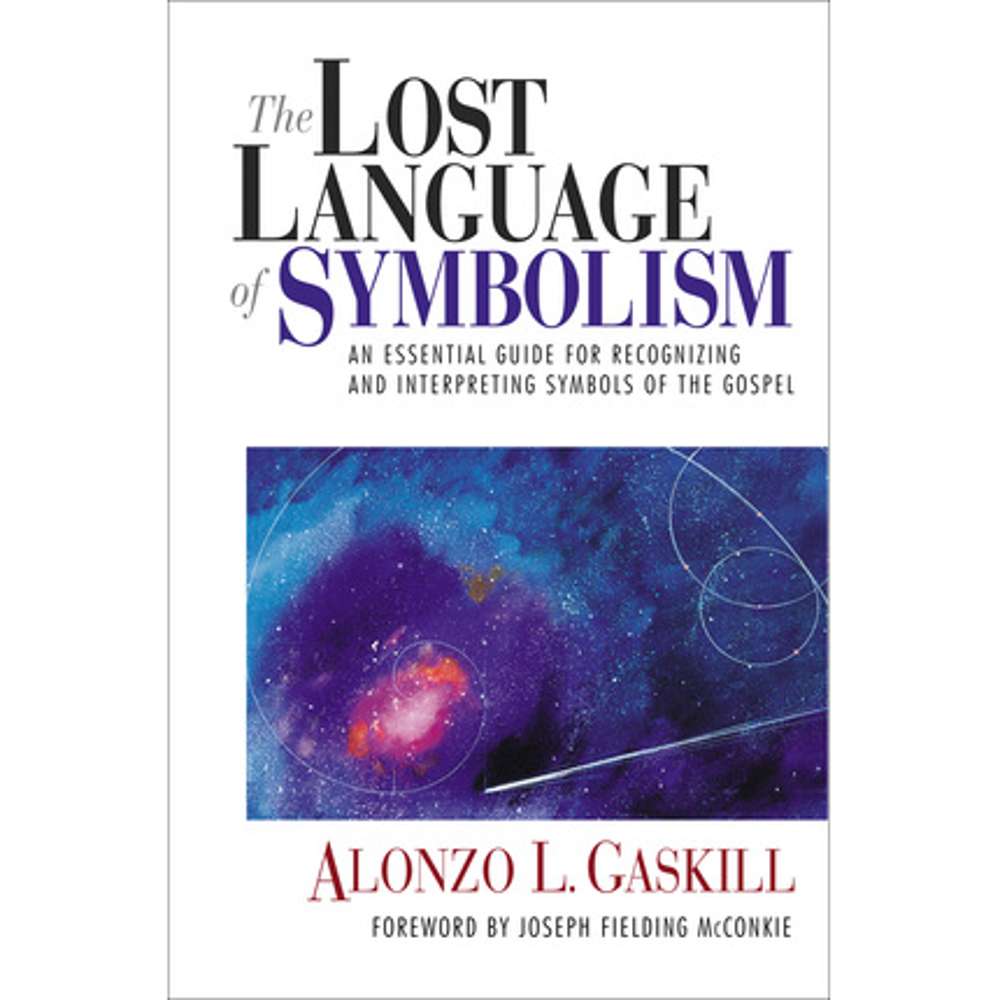
by Alonzo L. Gaskill
eBooks: Looking for more eBooks?
Click here to shop our huge selection of eBooks.
Other Formats Available
Product Description
Symbolism is a marvelously instructive and expressive language. . . . It partakes of the language of the heart and the language of the Spirit. . . . As Alonzo Gaskill deftly points out in this work, the language of symbolism embraces everything from the dust of the earth to the glories of the heavens. To miss what is being expressed or taught with symbols is like living in a world without sunsets or autumn leaves. — Joseph Fielding McConkie
"All things have their likeness," the Lord has said, "and all things are created and made to bear record of me, both things which are temporal, and things which are spiritual; things which are in the heavens above, and things which are on the earth" (Moses 6:63).
"Symbolism is the very language of scripture," writes author Alonzo Gaskill. As we more fully understand the symbolism in the scriptures and the temple, we are led to deeper, more profound insights and truths that previously eluded us. The result is that we can then more readily liken the scriptures unto ourselves for "our profit and learning" (1 Nephi 19:23).
This engaging and well-researched guide explores the symbolism of body parts, clothing, colors, numbers, directions, names, and animals in holy writ and in the temple. It also provides a series of charts comparing the lives of scriptural individuals and showing how they actually are types and symbols of Christ.
Filled with countless examples to help explain and support the author's discussion of symbols and their meanings, the text makes extensive references not only to recognized Latter-day Saint sources but also to lesser-known sources written by a variet1 of religious scholars both modern and ancient.
Symbolism is a language hidden in the margins, tucked between the lines, and suspended below the surface of the words. With study and effort, we can coax the symbolic meaning into the open and become fluent in reading the eternal truths it reveals. This book is an invaluable aid in that process.
Product Details
- Published: February 2003
- Pages: 560
About the Author
Dr. Alonzo L. Gaskill was reared near Indepence, Missouri, and joined the Church in the fall of 1984. One year later, he served a mission to England. He has attended several schools and universities, earning a master’s degree in theology and a Ph.D. in biblical studies.
He has taught graduate and undergraduate religious education courses at the University of California (at both Berkeley and Santa Cruz) and Idaho State University. He was the director of the LDS institute of religion adjacent to Stanford University, and is an assistant professor of Church history and doctrine at Brigham Young University. He is a frequent presenter at BYU’s Campus Education Week and Know Your Religion seminars.
Dr. Gaskill and his wife, Lori, are the parents of four children and reside in Payson, Utah.
Why Symbols?
Over the years, some of my students have questioned the propriety of interpreting a passage of
scripture symbolically when a literal interpretation might just as well be
drawn. Although we must be careful not to read into a text unintended meanings,
we should not be so literal that we overlook the symbolic dimension of
scripture.
There can be no question that symbolism in its various forms is intentionally
present in scripture.
Commenting on this fact, one scholar wrote: "It is impossible to properly and fully interpret the symbols in Scripture
without a proper understanding of the language of the symbol," for the scriptures "are written in the language of the symbol as well as the language of the type. . . . The whole of the Bible, from Genesis chapter 1 to Revelation chapter 22,
abounds with . . . symbolism."
Another commentator observed that "the whole outward creation . . . is so made as to represent spiritual things . . . ; thus almost everything that was said or done, that we have recorded in
Scripture from Adam to Christ, was [a type] of Gospel things."
Symbols are the language in which all gospel covenants and all ordinances of
salvation have been revealed. From the time we are immersed in the waters of
baptism to the time we kneel at the altar of the temple with the companion of
our choice in the ordinance of eternal marriage, every covenant we make will be
written in the language of symbolism.
Let us not forget that the primary purpose of scripture is to bring people unto
Christ and not simply to preserve a historical message.
For Philo of Alexandria, scripture, with God as its author, could not contain
useless information or insignificant details. It was not to be understood
solely on the basis of its literal meaning. Rather, the literal meaning was
much like the husk on an ear of corn—it was to be peeled off to reveal the more important symbolic meaning.
As interesting as the historical facts in scripture can be, they are eclipsed by
the spiritual messages. Astute readers should always be on the lookout for
profound meanings.
The scriptures themselves declare their symbolic nature, as the following sampling demonstrates. King Benjamin observed that Christ had given the people “many signs, and wonders, and types, and shadows . . . concerning his coming; . . . and yet they hardened their hearts, and understood not” (Mosiah 3:15). On numerous occasions Paul, Alma the Younger, Abinadi, and others testified that the law of Moses was a symbolic type of things to come (see Colossians 2:17; Hebrews 8:4–5; 10:1; Alma 25:15; Mosiah 16:14).
Indeed, Nephi joyfully declared, "Behold, my soul delighteth in proving unto my people the truth of the coming of Christ; for, for this end hath the law of Moses been given; and all things which have been given of God from the beginning of the world, unto man, are the typifying of him" (2 Nephi 11:4). Prophets such as Adam and Melchizedek are said to have been types of Christ (see 1 Corinthians 15:21–22; Romans 5:14; Hebrews 7; 8:1–3). Alma indicated that the Liahona was a symbol representing the words of Christ and that the brass serpent that Moses raised up in the wilderness foreshadowed Christ’s power to save those who would exercise faith in Him (see Alma 33:19; 37:38–45). He also taught that ordination to the priesthood was symbolic of Christ (see Alma 13:14–18; see also Hebrews 9–10). Abinadi declared that even the actions of King Noah against him would have symbolic and typological significance (see Mosiah 13:10; Alma 25:10).
According to Paul, the Church, or body of Christ, was prefigured in the story of Israel (see 1 Corinthians 10:1); baptism was symbolically depicted in the parting of the Red Sea (see 1 Corinthians 10:1–2); Christ was the spiritual “meat and drink” that Israel partook of in the wilderness (see 1 Corinthians 10:3–4); Abraham’s sons, Ishmael and Isaac, were types for the Old Law and the New (see Galatians 4:22–26); and the veiled face of Moses when he came down from Sinai symbolized how the Jews would not clearly see Jesus foretold in scripture (see 2 Corinthians 3:14–18).
Most importantly, the premortal Christ stated: "And behold, all things have their likeness, and all things are created and made
to bear record of me, both things which are temporal, and things which are
spiritual; things which are in the heavens above, and things which are on the
earth, and things which are in the earth, and things which are under the earth,
both above and beneath: all things bear record of me" (Moses 6:63). One Latter-day Saint specialist in the field of typology noted that some "seventy-five listings in the Topical Guide to the LDS edition of the King James Bible
refer to ’types, shadows and similitudes.
’"
Mormonism has its own unique set of symbols that play a significant role in LDS life, literature, and liturgy. The iron rod symbolizes the word of God, or scripture (see 1 Nephi 8:19); the Liahona, the guidance of the Holy Spirit (see 1 Nephi 16:10; Alma 37:38–40). Handcarts and covered wagons conjure images of faith, courage, sacrifice, and endurance. Seagulls remind us of God’s willingness to intervene in rather miraculous ways. The beehive has become a standard symbol for industry and work. The tree of life is equated with Christ, eternal life, the love of God, and the sweet joy of living the gospel (see 1 Nephi 8:10–12; 11:8–23; 15:21–22.). The initials CTR appear on rings worn by thousands of Latter-day Saints as a constant reminder to “choose the right.” The “Mormon Tabernacle” generates thoughts of choral music and perhaps the architectural genius of the early pioneers. The infamous “great and spacious building”—representing the wisdom and pride of the world—can evoke images of the worldly corruption leading to destruction (see 1 Nephi 11:35–36).
Each of those symbols brings to mind very strong and well-established images for
practicing Latter-day Saints. We simply cannot dismiss the significant role of symbolism in the scriptures of the restored gospel, nor can we overlook the influence of that
unique symbolism
The scholarly world is united in the belief that the standard Christian approach
to the Old Testament was typological.
Jesus especially used symbolic language. It was God’s secret code for veiling or revealing truth according to the attitude of the listener. He did this when He taught by the parabolic method. This is specially seen in Matthew 13 in the teaching on the
Parables of the Kingdom. . . . The disciples realized it was “the language of the symbol.” . . . They perceived by the interpretation of the parables that there was more to it
than the natural, the literal and the material.
Early Christian authors who believed that certain narrative events were
symbolically interpreted in the New Testament still deemed those events
historical. In their view, God inspired those involved in such events to live
in a symbolically significant manner, and he also inspired the recorders of
those events to emphasize the aspects that were later fulfilled in the New
Testament.
A further word regarding definitions is appropriate. Although it is necessary to
distinguish between symbols, types, allegories, and so on when examining a
passage of scripture, in this book the term symbolism has so far been used broadly to refer to any facet of symbolic meaning, such as
discourse, action, or clothing. Standard definitions include "something that stands for or represents another thing[,] especially an object
used to represent something abstract";
The word “symbol” derives from the Greek word súmbolon, which means literally “something thrown together”; this word can be translated “token.” Contracting parties would break a súmbolon, a bone or tally stick, into two pieces, then fit them together again later.
Each piece would represent its owner; the halves “thrown together” represent two separated identities merging into one. Thus this concept of “symbol” (unity; separation; restoration) provides a model for love, the Atonement,
separation and reunification, our original unity with God, our earthly
separation, our eventual return to the divine presence and renewed perfect
unity with God. Furthermore, this meaning of symbol shows that understanding
any symbol requires the “throwing together” of an earthly, concrete dimension and a transcendent, spiritual dimension.
Plato’s idea that knowledge is remembrance (of a premortal existence) has relevance here.
We might appropriately ask why the Lord and his prophets have chosen to use symbols when teaching or establishing modes of worship and ritual. Six possible reasons come to mind. First of all, to understand symbols requires persistent effort. Their use in the standard works and ordinances of the Church encourages participants to ponder the truths of the restored gospel and to seek the guidance and inspiration of the Holy Ghost. This attitude of prayerful searching and reflection is rewarded through the receipt of new discoveries, previously unknown insights, and a significantly deepened love for the scriptures and the temple.
Second, symbols are designed to protect that which is sacred by revealing truth and insight to those who are prepared and by concealing the same from the unworthy. Elder Bruce R. McConkie taught:
Our Lord used parables on frequent occasions during his ministry to teach gospel truths. His purpose,
however, in telling these short stories was not to present the truths of his gospel in plainness so that all his hearers would
understand. Rather it was to phrase and hide the doctrine involved so that only
the spiritually literate would understand it, while those whose understandings
were darkened would remain in darkness. (Matt. 13:10–17; JST, Matt. 21:34.).
A third reason why revealed religion is saturated in symbolism is that many
symbols are timeless,
Fourth is the reality that symbols have a tremendous ability to influence the mind and create lasting impressions. Traditionally, once we have attached a specific meaning to a given symbol, any future encounter of that symbol will bring a resurgence of thoughts or feelings associated with the assigned meaning. Perhaps one of the most universal examples of this reality is found in the sign of the cross. Although the majority of the world’s inhabitants (including Latter-day Saints) do not use the cross as a religious symbol, most people instantly associate it with Christianity, and nearly all Christians see it as a reminder of Christ’s sacrifice on their behalf.
A fifth reason might be that symbols are multilayered, providing numerous levels of understanding contingent upon one’s level of spiritual maturity or understanding. One commentator employs a helpful analogy to emphasize this point:
Symbols are the language of feeling, and as such, it is not expected that
everyone will perceive them in the same way. Like a beautifully cut diamond,
they catch the light and then reflect its splendor in a variety of ways. As
viewed at different times and from different positions, what is reflected will
differ, yet the diamond and the light remain the same. Thus symbols, like
words, gain richness in their variety of meanings and purposes, which range
from revealing to concealing great gospel truths.
Along the same lines, another scholar explains that symbols and types are
but a “shadow of . . . [heavenly truths]”; and therefore, like all shadows, they give but an imperfect representation. . . . Most objects cast differently shaped shadows as the light falls upon them in
various directions; . . . though the object is the same, the light is thrown upon it in different
directions, and reveals shadows cast from opposite sides: so is it in the types
[and symbols]. Sometimes in the same type [or symbol] we may find different
sides of the truth represented.
As a sixth and final point, those versed in religious symbolism will recognize that one of the great values of symbols is their ability to functionally teach abstract concepts. For example, bread as a symbol for Christ teaches well the abstract idea that Jesus must become part of our very beings if we are to be exalted in the celestial kingdom of God. Just as the bread we eat is digested and absorbed by our bodies, sustaining and strengthening us, so also Christ’s gospel and teachings must become a part of us—written upon the tables of our hearts, to use a common scriptural metaphor—if they are to strengthen and sustain us eternally.
Sadly, for some members of the Church,
symbolism is a dead language. The difficulties of interpretation and the
barriers posed by scriptural language have discouraged some Saints from
feasting upon the inspired word [or participating in the ordinances of the holy
temple.] But those hungering for this greater substance have turned to the
scriptures and commenced the struggle to learn the language of revelation. They have discovered that to be fluent in the language of the Spirit one
must be fluent in the language of symbolism.
The remainder of this book is dedicated to facilitating that understanding. It is my hope that readers who grasp the key aspects of scriptural symbolism outlined herein will be enabled to discover the deeper, more profound insights and truths that have eluded them, that they might more readily liken the scriptures unto themselves for their profit and learning (see 1 Nephi 19:23).
Notes to chapter 1: Why Symbols?
1. There is a crucial distinction between exegesis (applying the principles of hermeneutics, or biblical interpretation, to arrive at the original writer’s intended meaning, that is, the actual meaning) and eisegesis (reading into a text a meaning that the author likely did not intend). Although Latter-day Saints often accuse other religions of eisegesis, lay members of the Church are all too frequently guilty of this themselves. Eisegesis is sometimes referred to as “prooftexting” or, in other words, interpreting a verse without due attention to the context in which it is found. For a helpful primer on hermeneutics, see Virkler, Hermeneutics, 16, 18, 73, 84.
2. I use the generic term symbolism to refer not only to symbols but also to types, allegories, parables, and, to a lesser extent, similes, metaphors, and proverbs.
3. See Ryken, Wilhoit, and Longman, How to Read the Bible as Literature, 173; and McConkie, Gospel Symbolism, 1, 6.
4. The same could be said of those who make no effort to understand the cultural backgrounds of scripture. The result is most assuredly misunderstanding passages that are culturally conditioned. In this regard, books such as Gower’s New Manners and Customs of Bible Times and Mackie’s Bible Manners and Customs are most helpful.
5. LDS Bible Dictionary, s.v. “symbolism,” 777–78.
6. Conner, Interpreting the Symbols and Types, 1, 3.
7. Edwards, Images or Shadows, 63.
8. McConkie and Parry, Guide to Scriptural Symbols. See McConkie, Mormon Doctrine, 773. Elsewhere Joseph Fielding McConkie has written: "There are few if any stories in the scriptures that do not cast a shadow, that are not types or illustrations of greater principles or events. Virtually every passage of scripture is layered with meaning, and its full interpretation need not be limited to our present understanding. . . . For us to begin to see those countless types and shadows, the endless symbolic representations of Christ, is for us to be ever assured of the reality of his gospel and the blessings enjoyed by those who choose to live it" ( Gospel Symbolism, 249).
9. See Virkler, Hermeneutics, 140–45, 184–85. Gilbert Cope put it this way: The purpose of the Bible is to change and sanctify the “human destiny” (Symbolism in the Bible and the Church, 11). See Childs, Old Testament Theology, 89; Edwards, Images or Shadows, 63, 77; and Goppelt, Typos, 48–50.
10. Fee and Stuart, How to Read the Bible, 80.
11. Origen, “Homily on Leviticus,” 32. "By the beginning of the eighteenth century, an array of Deists and Freethinkers, supported by a scholarship which could not be scorned, suddenly appeared on the scene with the contention that if biblical rhetoric were really to be read in a straightforward, honest fashion, it would prove the Bible to be a book like any other book, like Homer or Virgil." Thus, there must be a typological or deeper symbolic message embedded in the text. “The bizarre rites of the Mosaic law . . . were to be ‘opened,’ and the doctrines, which were ‘invisible,’ extracted from them, like the meat from a nut” (Edwards, Images or Shadows, 10, 11).
12. Philo’s statement to this effect is cited in Davidson, Typology in Scripture, 21 note 1. Nephi declared, “I did liken all scriptures unto us, that it might be for our profit and learning” (1 Nephi 19:23). Origen wrote, “For, with respect to holy Scripture, our opinion is that the whole of it has a ‘spiritual,’ but not the whole a ‘bodily’ meaning, because the bodily meaning is in many places proved to be impossible” (“De Principiis,” 4:369). This corresponds with the Qur’an’s proclamation that “God disdains not to use the similitude of [all] things” (Sura 2:26)—including the gnat (the lowest of things), as well as the highest of His creations (see also Sura 22:73; 29:41).
13. Quoted in Davidson, Typology in Scripture, 26–27.
14. Goppelt, Typological Interpretation, 46.
15. Goppelt directs this counsel to exegetes (see ibid., 57). He also states, "By means of symbolical interpretation a deeper meaning and an intrinsic reason is sought for legal regulations and customs that outwardly seem arbitrary or curious" (ibid., 31). This approach invites “a more profound interpretation of the Old Testament” and motivates the earnest reader to “search for meaning beyond the literal grammatical-historical explanation” (ibid., 7).
16. Read, Unveiling Biblical Prophecy, 10.
17. One LDS scholar commented, "More connected to Hebrew traditions than most Christian churches and at the same time eschewing many traditional Christian symbols, LDS symbolism is unique among modern religions" (Compton, “Symbolism,” 3:1428).
18. See Althaus, Theology of Martin Luther, 96; Childs, Old Testament Theology, 85; Terence Fretheim, Interpreting Biblical Texts, 121; Goppelt, Typological Interpretation, 4, 198, 200; Grant and Tracy, Short History of the Interpretation of the Bible, 9, 36; and Lategan, “Hermeneutics,” 3:150.
19. Richard Davidson noted that “the Apologists of the second and early third centuries—especially Justin Martyr (d. 165), Tertullian (ca. 160–220), and Irenaeus (ca. 140–202)—made copious use of typology” (Davidson, Typology in Scripture, 20. See Cope, Symbolism in the Bible, 28, 30; Edwards, Images or Shadows, 44–45, 49, 129–30; Farrar, History of Interpretation, 156; Goppelt, Typological Interpretation, 9; and von Rad, “Typological Interpretation of the Old Testament,” 27).
20. Farbridge, Studies in Biblical and Semitic Symbolism, 5, 53. J. H. Krutz indicated that a “wide-spread predominance of symbolism in all that concerned the worship of God” prevailed in Old Testament times (Sacrificial Worship of the Old Testament, 27). Indeed, an unlimited number of types and symbols fulfilled in the antitypes of the New Testament exist in the Old Testament text. For more discussion, see Davidson, Typology in Scripture, 108 note 1; von Rad, Old Testament Theology, 2:282–83, 319–429; and Hasel, Old Testament Theology, 2:363.
21. Grant and Tracy, Interpretation of the Bible, 33. There is a "continuity between Jesus and [Paul]. This continuity is evident in the attitudes of Jesus and of Paul towards the interpretation of the Old Testament. . . . Paul, who lives after the death and resurrection of Jesus, is able to discover many messianic allusions. . . . He does not deny the reality of the Old Testament history. . . . His exegesis is Christocentric. To him Jesus is the promised Messiah, and not only the passages which explicitly foretell his coming, but the scriptures as a whole, are full of references to him. . . . Paul believes that unless the Old Testament writer had Christ in mind, his expressions would be meaningless. . . . For Christians the Old Testament is not a self-sufficient book. Its message is not complete. It looks forward beyond its own time to the coming of one who we believe came in Jesus" (ibid., 17, 18, 19, 20, 25–26).
22. Ibid., 11.
23. Lee, “Truly All Things Testify of Him,” 99.
24. Conner, Interpreting the Symbols and Types, 4–5.
25. See ibid., 5, 12; Grunfeld, Jewish Dietary Laws, 1:25; and Goppelt, Typological Interpretation, xvi, 48–50, 201–2.
26. One controversial aspect of contemporary biblical interpretation involves the degree to which one should take scripture literally or figuratively. Conservative Christians have been condescendingly referred to as “wooden-headed literalists,” whereas theologically liberal Christians tend to see events such as the Fall, the Deluge, or the life of Job as nonhistorical metaphors, allegories, or symbols (see Virkler, Hermeneutics, 27). But, as three scholars note, "it is not a matter of making things up but of ‘packaging’ them—in other words, of selectivity and arrangement. . . . There can be no doubt that the writers of the Bible carefully selected and arranged their material. The result is that the accounts we find in the Bible are more highly structured than real life is ordinarily felt to be, with the result that we see things more clearly in the Bible than we usually do in real life" (Ryken, Wilhoit, and Longman, Dictionary of Biblical Imagery, xvi–xvii). Elsewhere we read that in the New Testament Jesus "regards the events of the Old Testament times as real events. . . . And yet they are more than historical events. They have direct relevance to the times in which Jesus stands" (Grant and Tracy, Interpretation of the Bible, 9). Appropriately, Ryken, Wilhoit, and Longman ask, "Do literary conventions mean that the Bible is fictional? It is fair to ask at this point how all this talk about literary conventions relates to the question of the historicity or fictionality of the Bible. The answer, in brief, is that the presence of conventions and literary artifice in the Bible does not by itself say anything at all about historicity or fictionality" (Ryken, Wilhoit, and Longman, Dictionary of Biblical Imagery, xvi).
27. McKechnie, Webster’s New Twentieth Century Dictionary, s.v. “symbol,” 1847.
28. Bullinger, Figures of Speech, 769.
29. Buttrick, “Symbol,” 4:472.
30. McKechnie, Webster’s New Twentieth Century Dictionary, s.v. “symbol,” 1847.
31. Compton, “Symbolism,” 3:1428; see Conner, Interpreting the Symbols and Types, 5. Compton’s reference to the writings of Plato is found in Meno, 81c–d, where Meno asks Socrates, “What do you mean when you say that we don’t learn anything, but that what we call learning is recollection?”
32. McConkie, Mormon Doctrine, 553.
33. See McConkie, Gospel Symbolism, 1.
34. Frye, Anatomy of Criticism, 99.
35. See Bayley, Lost Language of Symbolism, 1:96–97; 2:309; Cooper, Encyclopaedia of Traditional Symbols, 94–95; Ryken, Wilhoit, and Longman, Dictionary of Biblical Imagery, 484; Tresidder, Symbols and Their Meanings, 60; and Wilson, Dictionary of Bible Types, 248.
36. Ryken, Wilhoit, and Longman, Dictionary of Biblical Imagery, 99.
37. See Farbridge, Biblical and Semitic Symbolism, 231; Ryken, Wilhoit, and Longman, Dictionary of Biblical Imagery, 99–101; and Wilson, Dictionary of Bible Types, 44–46. Some dictionaries and encyclopedias of symbolism place a seemingly positive spin on blood as a symbol. However, when blood is seen as a potentially positive token (via its connection with covenant making, sacrifice, or life), it is often still negative because of its tie to the penalties associated with covenant breaking, the bloodshedding sacrifice of Christ on our behalf, and the Fall of man, the latter bringing death and sin into the world.
38. McConkie, Gospel Symbolism, ix.
39. Habershon, Study of the Types, 22.
40. See McConkie, Gospel Symbolism, ix.
2
Why Symbols?

The Art of Interpreting Symbols

What a great book!!
by Tom - reviewed on May 03, 2003
Your gospel library isn't complete unless you have this book! The author does a great job of explaining what different symbols in the scriptures mean. The author has also included some very nice tables in the back of the book that are a great quick reference to finding the meaning of different symbols. This is a muxt have for any teacher or student of the gospel!
Great Book!
by Customer - reviewed on June 20, 2006
Ever since I have started reading this book, I cant help but read and look at everything in a new light. Its amazing the insights and knowledge that you can learn from just understanding little bits of symbolism. It sparks thoughts that you would have never thought of before. Truely, 'To miss what is being expressed or taught with symbols is like living in a world without sunsets or autumn leaves.' --Joseph Fielding McConkie
Amazing!
by Neil - reviewed on May 21, 2010
Gaskill did a fantastic job of presenting the information. I would highly recommend this book for any person interested in symbolism.
A Clarification
by Customer - reviewed on April 04, 2008
I just wanted to comment on Arle's review. Wow! What a misrepresentative review of a book. Arle says things like 'Gaskill...simply asserts things that are simple unknowable (e.g., the name Sherem in the Book of Mormon means 'pugnosed'...which raises the question of where Gaskill got his early Nephite dictionary)...' All the reviewer would have to do is look at the endnotes - which make up nearly a third of the book. Gaskill give references for nearly every claim he makes (including 'Felix')- and in many cases multiple references. Yes, Gaskill states that the name Sherem means 'pugnosed' or 'snubnosed.' But the reviewer misleads his readers into thinking this is something Gaskill made up. But the endnote (which the reviewer should have read) indicates that this is not Gaskill's theory; it is Hugh Nibley's - one of Mormonism's most prolific and respected scholars. The reviewer should be honest with his readers instead of implying that the author (Gaskill) is making things up. At least say that it is Nibley that made this claim, and then criticize Nibley. But to imply that this was just some unfounded and unsupported statement seems dishonest. What's the point of writing a review that misrepresents the facts? If you don't like a book, that's fine. But to misrepresent the book or its author seems to say more about you than it does about the book and its author.
Keep this book open when reading the scriptures
by cleve - reviewed on January 27, 2012
The scriptures are full of symbols. Symbols enrich the messages and give us deeper meaning of what the prophets are communicating to us. This book unlocks the meaning of words and phrases of distant cultures and languages. Gaskill writes with clarity, has provided excellent research and documentation. Don't miss reading the footnotes for sources and additional insights. This is a great reference book. There are two books besides the scriptures that I carry to church, one is TPJS and the other is the Lost Language of Symbolism. Thank goodness it is now an e-book. That will lighten my load.

Points
Add to My Wish List